


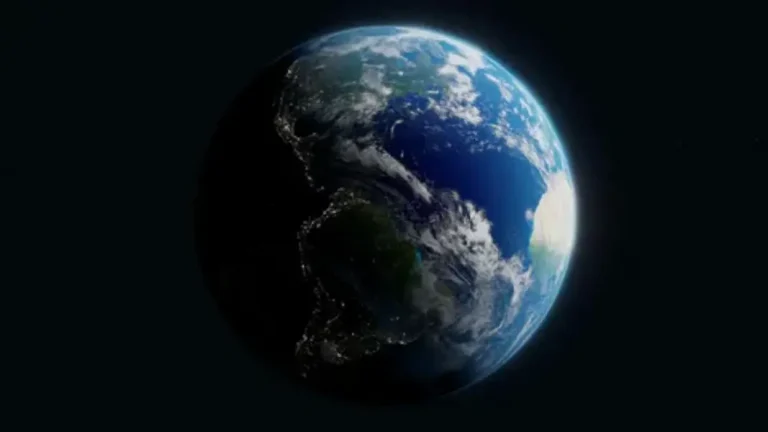
The question “How old is the Earth according to the Qur’an?” is one that many Muslims and non-Muslims ask when exploring the relationship between Islamic teachings and science. While the Qur’an is not a scientific textbook, it provides profound insights about creation, the origins of life, and the formation of the heavens and the earth. These verses guide believers toward reflection, humility, and understanding of Allah’s power rather than offering numerical timelines.
Creation of Adam
The creation of Prophet Adam (ʿalayhi as-salām) is one of the most central and profound narratives in the Qur’an. Adam is honored as the first human being and the father of humanity, and Allah describes his creation in several stages, each revealing divine wisdom, dignity, and purpose.
Created from Clay
Allah tells us that Adam was created from earthly elements such as clay, dust, and soil:
- “He created him from dust.” (Qur’an 3:59)
- “We created man from an extract of clay.” (Qur’an 23:12)
This shows that human beings are tied to the Earth, created from its materials yet elevated by spiritual purpose.
Shaping and Perfecting Adam
After creating the clay form, Allah shaped Adam into a complete human form:
“Who perfected everything He created and began the creation of man from clay.” (Qur’an 32:7)
The first stage of Adam’s existence shows that God made him through a purposeful process, which sets him apart from other natural living beings.
Breathing the Soul Into Adam
The most honored stage came when Allah placed the Rūḥ (spirit) into Adam:
- “Then He proportioned him and breathed into him of His spirit.” (Qur’an 32:9)
This divine act gave Adam:
- Consciousness
- Moral responsibility
- The ability to reason and choose
- A soul connected to its Creator
This is what elevates human beings above many other creations.
Angels Ordered to Prostrate to Adam
Once Adam was given life and knowledge, Allah commanded the angels to respect him:
- “And when We said to the angels, ‘Prostrate to Adam,’ they prostrated…” (Qur’an 2:34)
This was not a prostration of worship, but of honor and acknowledgment of Adam’s special status.
Adam Is Taught Knowledge
Allah taught Adam names, meanings, and knowledge that even the angels did not possess:
- “And He taught Adam the names, all of them.” (Qur’an 2:31)
This highlights:
- Human intellectual capacity
- Our ability to learn, analyze, and innovate
- The divine gift of knowledge as a foundation of human excellence
Adam’s Purpose on Earth
Allah declared Adam a Khalīfah (vicegerent) on Earth:
- “Indeed, I will place upon the earth a vicegerent.” (Qur’an 2:30)
This means humanity was created with:
- Responsibility
- Stewardship over nature
- A moral and spiritual mission
Not a Timeline but a Purpose
The Qur’an does not tell us when Adam was created in relation to Earth’s age.
Why? Because the story of Adam is about:
- Human origin
- Divine purpose
- Our relationship with Allah
not about geological or historical dates.
Creation of All Things From Nothing
You can learn the entire Islamic core on IQRA. One of the core teachings of Islam is that Allah created everything from nothing. This is called “al-khalq min al-‘adam.”
Allah says:
“Allah is the Creator of all things.” (Qur’an 39:62)
“The Originator of the heavens and the earth.” (Qur’an 2:117)
The Qur’an also alludes to a cosmic beginning:
“The heavens and the earth were joined together as one unit, then We parted them.” (Qur’an 21:30)
Many scholars point out that this verse aligns with the idea of an initial singularity before the expansion of the universe, though the Qur’an does not engage in scientific calculations.
Islamic teachings emphasize purpose, signs, and reflection rather than chronology.
Also read about : basic beliefs of Islamic religion
How Old Is the Earth According to the Qur’an?
There is no information in the Qur’an concerning the age of the Earth. This is in contrast to many other religious texts that provide a genealogical timeline. In Islam, the association between faith and a specific chronology is not present. The Quran does not provide a chronological timeline but emphasizes the ultimate purpose of creation as well as the power and existence of Allah. The glory of Allah and the existence of Allah and his signs are the core attributes of the Qur’an, not an indication of the chronology of creation.
There is no verse in the Qur’an that states:
- Earth was formed in X number of years.
- Human beings were formed in X number of years after the formation of Earth.
- The Universe was formed in X number of years.
The intention behind the absence of an exact age for the Earth is to prevent having an opposition to belief (ʿaqīdah), the opposer of worship (ʿibādah), and the opposer of moral conduct. Believers are encouraged by the Qur’an to reflect on the signs of creation rather than the statistical information associated with the creation of the Earth. As Allah states:
“Verily, in the creation of the heavens and the Earth, and the alternation of night and day, are signs for those of understanding” (Qur’an 3:190).
In How Many Days Did Allah Create the Heavens?
The Qur’an mentions creation occurring in six days (ayyam):
“Indeed, your Lord is Allah, who created the heavens and the earth in six days…” (Qur’an 7:54)
But what is the meaning of “days”?
In Arabic, “yawm” can mean:
- A day
- A long period
- A stage or phase of creation
The Qur’an itself states:
“A day with your Lord is like a thousand years of what you count.” (Qur’an 22:47)
“…and a day is like fifty thousand years.” (Qur’an 70:4)
Thus, scholars explain:
- These “days” of creation are periods or stages, not 24-hour earthly days.
- Earthly time did not exist in the same way before the creation of the heavens and the Earth.
This maintains alignment with both Islamic theology and scientific understanding of cosmic development occurring over vast epochs.
Also read about : Islamic boy names from Quran A to Z
How Old Is the Sun According to the Qur’an?
Similar to Earth, the Qur’an does not give the sun’s numerical age.
However, the Qur’an provides insights about:
- Its purpose
- Its function
- It’s limited lifespan
Examples:
“And the sun runs its fixed course.” (Qur’an 36:38)
“And We made the sun a shining lamp.” (Qur’an 71:16)
Islam teaches that:
- The sun was created by Allah for human benefit.
- It has a predetermined course and eventual end.
- It is not eternal.
Modern science estimates the sun is ~4.6 billion years old.
Islam neither confirms nor denies this number; it simply affirms that the sun is a created object with a defined life.
Also read about: what does the Quran say about women’s rights
Conclusion
The Qur’an does not specify the Earth’s exact age, nor the exact age of the sun or the universe. Instead, it emphasizes:
- Allah’s complete power over creation
- Purposeful design
- Reflection on natural signs
- Stages of creation rather than numerical timelines
Islam encourages curiosity, observation, and scientific discovery while grounding believers in the understanding that everything in existence begins and ends by Allah’s command.
Thus, the Quranic perspective complements—rather than contradicts—scientific inquiry about Earth’s age and origins.
FAQs
1. Does the Qur’an say Earth is 6,000 years old?
No. This idea comes from some Biblical interpretations, not from the Qur’an or Islamic teachings.
2. Does the Qur’an give an exact age for the Earth?
No. The Qur’an deliberately avoids numerical timelines of Earth’s age.
3. Did Allah create the Earth in six literal days?
The “six days” refer to stages or phases, not necessarily 24-hour days.
4. Are Islam and modern science in conflict about Earth’s age?
No. Since the Qur’an does not state a specific age, scientific findings do not contradict Islamic beliefs.
5. How old is the universe according to Islam?
Islam does not assign an age, but affirms that Allah created the universe from nothing and controls its destiny.
6. Does the Qur’an mention the Big Bang?
Many scholars interpret Qur’an 21:30 as an indication of the universe originating from a unified mass before being separated.
7. Does the Qur’an say when the sun will die?
It does not give a date, but it clearly states the sun will eventually end its course.