


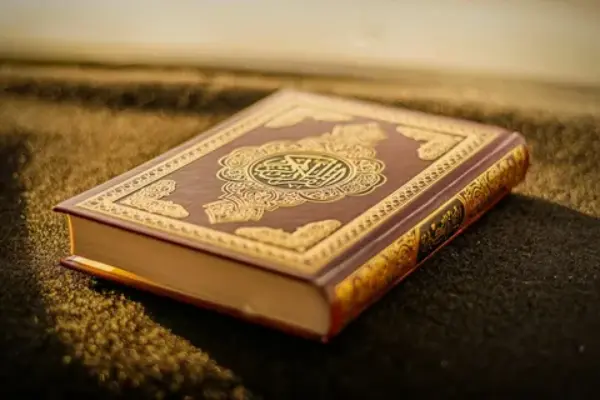
The inquiry “Who wrote the Quran and when was it written ?” has been a source of intrigue for devotees, historians, and truth seekers for a long time. The Quran is nothing less than the very word of God imparted to Prophet Muhammad (peace be upon him), and the preservation of it provides a clearer understanding of the reason why the book remains the most reliable and unaltered scripture throughout human history.
What is the Quran?
The Quran is the holy book of Islam, which is perceived by Muslims to be the literal word of Allah(God) and revealed to the Prophet Muhammad(peace be upon him) during a period of 23 years via the Angel Jibreel (Gabriel). It acts as a complete guide to humankind, containing issues concerning faith, worship, morality, law, and everyday life.
The Quran is penned down in the classic Arabic language that boasts of unsurpassed linguistic beauty and richness. It is composed of 114 chapters (surahs) and more than 6,000 verses (ayahs). The length of each surah is different, and their subject matter is vast, encompassing the stories about ancient prophets and countries, as well as instructions about justice, mercy, patience, and the oneness of God.
History of the Quran
The Quran’s history is a wonderful account of divine revelation, preservation, and transmission. It goes as far back as Prophet Muhammad (peace be upon him) in the 7th century, till today without any change whatsoever, and strictly guarded by both verbal and written sources.
The Revelation Begins
It was revealed to the Prophet Muhammad (peace be upon him) first at the Cave of Hira near Makkah in 610 CE when the Prophet was meditating there. The Angel Jibreel (Gabriel) came to him, and the revelation first spoke:
Read in thy name thy Lord who fashioned…
This was the start of the revelation of the Quran, which lasted 23 years, half in Makkah and half in Madinah. The revelations touched upon various situations, such as personal instructions to the Prophet, moral and spiritual teachings, legal norms in the Muslim society, and reactions to the events in the developing Muslim community.
Stabilization of Oral and Written Preservation.
At the onset, the Prophet’s companions (the Sahabah) memorized the Quran, and the scribes were used to write down the Quran on parchment, leather, and bones. The verbatim arrangement of the verses would be dictated by the Prophet Muhammad (peace be upon him) himself, and the exact order in each of the chapters would be confirmed as well through the divine command of the Prophet Muhammad.
Such a combination of memorizing orally (ḥifẓ) and writing was a guarantee that not a single word would be lost or changed. A good number of companions turned into Huffaz (those who memorized the whole Quran), and recitations in the streets were the order of the day.
The Prophet passed away and his words were compiled.
The Quran was compiled into one manuscript upon the command of the first Caliph, Abu Bakr al-Siddiq (may Allah be pleased with him), after the death of the Prophet in 632 CE. This was driven by Zayd ibn Thabit, who was one of the greatest scribes to the Prophet. The original was also gathered by means of all the written and memorized material and checked by cross-examining with various witnesses.
The Standardization Under Caliph Uthman.
Approximately two decades later, at the caliphate of Uthman ibn Affan (may Allah have mercy on him), the Muslim empire had grown vast, and the differences in dialects and styles of recitation had started to arise. In order to maintain the integrity of the Quran, Caliph Uthman commissioned an official standard version, the Uthmanic Mushaf.
Who Wrote the Quran and When Was It Written
The Quran did not come through any human being to the world; the Quran is the word of Allah (God), which was revealed to the Prophet Muhammad (peace be upon him) by the Angel Jibreel (Gabriel). Muslims also hold the view that the Prophet neither wrote nor composed the Quran, but was urged by God to act as a recipient and relay it to him as given without any loss or editing.
The Divine Revelation
Revealing of the Quran started in 610 CE when Prophet Muhammad (peace be upon him) was around 40 years old. His prophethood started with the first verses being revealed in the Cave of Hira near Makkah. The Quran was still revealed in bits spanning 23 years, to comment on the changing realities of the early Muslim community and provide guidance as well as the teaching of divine values of justice, mercy, and faith.
The Reporting of the Prophet in his lifetime.
Even though the Prophet Muhammad (peace be upon him), was illiterate, he had appointed the scribes who used to write the revelations as they were dictated to him. Such scribes as Zayd ibn Thabit, Ubayy ibn Ka‘b, and Ali ibn Abi Talib were also prominent companions. The Prophet used to dictate each verse, and these were written down by the scribes using parchment, palm leaves, leather, or bones.
Meanwhile, several of the Prophet’s companions were able to memorize the Qur’an by heart – an oral tradition that continues to constitute one of the most important elements of Islamic endeavor even to the present day. The Prophet also told the location of every verse in the surahs (chapters) so that the divine order of the text would remain unchanged as it was revealed.
Editorial Compilation The compilation made after the death of the Prophet.
When the Prophet died in 632 CE, the Caliph at the time, Abu Bakr al-Siddiq (may Allah be pleased with him), requested the compilation of the Quran in one manuscript. This was assigned to Zayd ibn Thabit, who critically collected all the written and memorized material, not missing a bit and not putting it out of place.
The Quran was later codified into a single authorized version to maintain its accuracy when being spread to new areas with other dialects during the reign of Caliph Uthman ibn Affan (may Allah be pleased with him) around the year 650 CE. A number of copies were reproduced and distributed to the key Islamic cities to make sure that the Quran was identical in the entire Muslim world.
A Revelation, Not Authorship
The Quran was basically revealed by Allah and recited by the Prophet Muhammad, and was written by his companions and preserved by the Muslim people. The Prophet himself never said that he was the author of it; he was the messenger, not the writer. The Quran itself witnesses to its divine origin:
Your friend [Muhammad] has not digressed, nor has he gone astray. Nor does he talk on his own will. It is just a revelation that is dispatched to him.
(Surah An-Najm, 53:2–4)
Is the Quran Human Sourced?
No. The origin of the Quran is not a human being. It is beyond human ability due to its literary excellence, prophecies, and scientific precision. Allah says:
Say, were man and the jinn to assemble together in order that they might create the like of this Qur’an, they could not create the like of it.
(Surah Al-Isra 17:88)
How Old is the Quran?
The Quran is more than 1,400 years old and is dated to the early 7th century. Amazingly, it is the same since it was revealed that it has been recited by millions of Muslims worldwide in the exact wording in Arabic as it was revealed to Prophet Muhammad.
Who Physically Wrote the First Official Quran?
After the Prophet’s death, Caliph Abu Bakr (RA) assigned Zayd ibn Thabit to compile the Quran into one complete manuscript. Later, under Caliph Uthman ibn Affan (RA), copies were made and distributed across the Islamic world. This compilation became the official standardized Quran still used today.
What Year Was the Quran Written?
The revelations spanned from 610 CE to 632 CE. Shortly after the Prophet’s death, the Quran was collected into a single book under Caliph Abu Bakr (633–634 CE), and later standardized around 650 CE by Caliph Uthman to maintain unity among Muslim communities.
Also read about: last ten surah of quran in english
The Revelation of the Quran
The Quran was revealed gradually to guide humanity through different phases of life and spiritual growth. Some verses offered comfort, others commanded justice or clarified divine law. Allah Himself declares:
“Indeed, it is We who sent down the Qur’an, and indeed, We will be its guardian.”
(Surah Al-Hijr 15:9)
This verse assures that divine protection would preserve the Quran from alteration or corruption.
Recording the Quran During the Prophet’s Life
During Prophet Muhammad’s life, many companions wrote down the Quran on parchment, bones, palm leaves, and stones. Scribes such as Zayd ibn Thabit, Ali ibn Abi Talib, and Ubayy ibn Ka‘b recorded every revelation. Thousands also memorized it, ensuring both oral and written preservation, a unique dual method unmatched by any other scripture.
Prophet Muhammad’s Role as Messenger
Allah selected Prophet Muhammad (peace be upon him) as the last messenger to pass his divine message -the Qur’an- to humankind. He did not write the Quran or author the Quran, but was the recipient of the Quran, its carrier, and its adherent.
The Prophet used to recite the verses in the exact form in which they were revealed and have them memorized and documented, as the revelation came to him by the Angel Jibreel (Gabriel). He educated the people on how to read, practice, and memorize the Quran accurately in their lives.
In addition to his role of sending the message, he was the model of its teachings; he showed mercy, justice, patience, and humility. His deeds were used as a living model of what was stated in the Quran. His personality was what the Islamic tradition tells about, the Quran itself.
Has the Quran Ever Changed Over Time?
No, the Quran has never been amended as it was revealed more than 1400 years ago. According to the Muslims, it is exactly as it was interpreted to Prophet Muhammad (peace be upon him), word to word, no addition, no deletion, and no corruption.
Since the revelation, the Prophet’s companions memorized and also wrote the Quran. These two times maintenance by the word and by the writing secured that no verse was lost.
The Quran adaptation into a one official copy was made during the caliphate of Uthman ibn Affan (may Allah be pleased with him) so as to maintain its unity as Islam went to new territories. The same versions were spread all over the Muslim world, and it is the same version that is used today.
Millions of Muslims are still reciting the whole Quran in its original Arabic and reading it word-for-word as it was 14 hundred years ago. This continuity of transmission satisfies the promise of Allah:
Well, We have revealed the Quran and we will surely safeguard it.
(Surah Al-Hijr, 15:9)
Common Misconceptions About the Quran
- Prophet Muhammad was the one who wrote the Quran.
There is a common misunderstanding among many people that Prophet Muhammad (peace be upon him) was the writer of the Quran. As a matter of fact, he was illiterate; he did not know how to read or write, and the Quran itself pronounces that it is not the word of man, but the word of Allah. The Prophet had the responsibility of accepting the revelation and dispatching it in an uncorrupted form to mankind.
- The Quran Has Reshaped Over the years.
As compared to other scriptures, the Quran has never been distorted as it was revealed 1, 400 years ago. Thousands of companions memorized it, and it was documented during the lifetime of the Prophet. Millions of people in the world today recite the same text using the same Arabic words.
- The Qur’an Is Only for Muslims
The Quran is not exclusive to Muslims; it is an invitation to the whole of humanity. It invites human beings to believe in a single God, live in justice, mercy, and peace, and ponder on why they are here.
- The Qur’an Promotes Violence
It is amongst the most common and destructive misconceptions. The Quran, in fact, denounces injustice, oppression, and aggression. Fighting verses are given a particular historical situation – primarily of self-defense – and are offset with explicit exhortations to mercy, forgiveness, and peace.
- Quran is a Contradiction of Science.
The widespread belief is that religion and science cannot coexist, but the Quran supports open-mindedness, contemplation, and searching for knowledge. It is full of verses, which explain natural things and processes, e.g., the embryo formation, the motions of the planets, the cycle of water, in terms that are consistent with current scientific knowledge.
- The Quran dismisses the rights of women.
The status of women was actually raised in the Quran when they were mostly denied their fundamental rights. It gave women the right to inherit, possess property, pursue education, as well as to select a marital partner. It encourages equal respect and equilibrium between men and women.
Did Jews and Christians in Medina Write the Quran?
No. Historical evidence and the Quran’s linguistic structure refute this claim. The Quran directly addresses Jews and Christians, often clarifying their misunderstandings about divine revelation. Its eloquence and depth could only have come from the Creator Himself.
The Significance of Quranic Teachings
The Quran’s teachings transcend time. It calls for justice, mercy, humility, and faith in one God. It reforms hearts and societies by connecting humans directly to their Creator, offering solutions for both spiritual and worldly challenges.
Incorporating Ayat and Hadiths
Muslims follow both the Quran and Hadith (the Prophet’s sayings). The Quran gives divine commands, while Hadith explains how to apply them. Together, they form the foundation of Islamic belief, worship, and ethics.
Who Compiled the Quran into One Book?
The main compiler was Zayd ibn Thabit, a close companion and trusted scribe of the Prophet. His task was to gather all written fragments, verify them with living memorizers (Huffaz), and ensure perfect accuracy, a meticulous process unmatched in historical preservation.
Why This Question Matters Today
In a world full of misinformation, knowing the Quran’s divine origin strengthens faith and fosters understanding. Recognizing that it is the unaltered word of God highlights its timeless authority and spiritual relevance in today’s modern world.
Does the Quran Rely on Biblical Sources?
The Quran acknowledges earlier prophets and scriptures but corrects and completes their messages. It does not rely on the Bible or Torah; rather, it confirms the truth they once contained while providing the final and complete revelation for humanity.
Is It True That the Quran Contains Scientific Knowledge That Was Unknown At the Time of Its Revelation?
Yes. The Quran mentions natural phenomena that were unknown in the 7th century — including embryonic development, the expansion of the universe, and oceanic barriers. These references align with modern science, demonstrating the Quran’s divine wisdom.
Conclusion
The Quran is the word of Allah, revealed to the Prophet Muhammad (peace be upon him) through Angel Jibreel between 610 and 632 CE. It has no human author, no contradictions, and no alterations. Preserved in its original Arabic for over 1,400 years, it remains a living miracle, guiding hearts and minds across generations.
Learn Quran with Certified Native Teachers
Deepen your connection to the Quran by learning from certified native Arabic teachers. Whether you are a beginner or advanced learner, online Quran classes help you master Tajweed, understanding, and recitation, bringing the message of Allah closer to your heart.
FAQs
Q1: Who wrote the Quran originally?
No one “wrote” it; it was revealed by Allah and recorded by the Prophet Muhammad’s companions.
Q2: When was the Quran completed?
The final revelation occurred in 632 CE, during the Prophet’s last year of life.
Q3: Has the Quran ever been changed?
No, the Quran remains exactly as it was revealed, preserved through memorization and written documentation.
Q4: Is the Quran based on other scriptures?
No, it confirms the original messages of previous prophets but stands as the final, unaltered word of Allah.
Q5: How can I learn to read and understand the Quran?
Join online Quran programs with native teachers who specialize in Tajweed, Tafsir, and Quranic Arabic, making learning accessible, authentic, and spiritually enriching.