


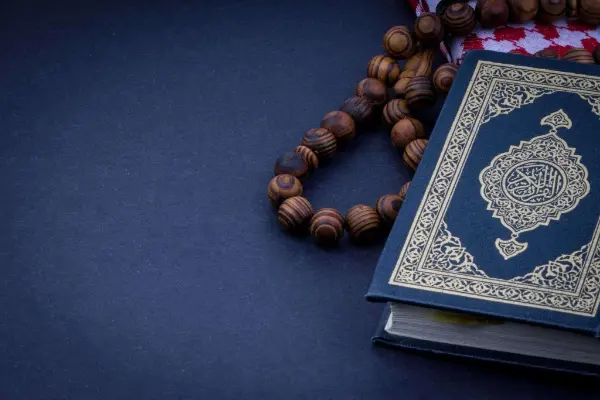
The Holy Quran is a divine revelation that was given to Prophet Muhammad (peace be upon him) over 1,400 years ago, and serves as a guidance for humanity, teaching morals, laws, spirituality, and faith. A common question that is asked by most people is: How many pages are in the holy Quran? This number can vary due to several factors, including the script, translation, and style of the print.
What Is the Quran?
The holy book of the Islamic faith is the Quran, and Muslims believe that it is the same word of Allah (God) that was revealed to the prophet Muhammad (peace be upon him) more than 1,400 years ago. This book has 114 chapters/surahs of different lengths in classical Arabic. These chapters are touching on different matters related to belief, ethics, law, rules of personal behavior and social justice.
On the other hand, Muslims are of the view that the Quran has not been manipulated in any way since the time of revelation. It is recited day by day, it is known by millions of persons, and it serves as the source of spiritual, moral, and legal reference among Muslims everywhere.It is natural to understand its purpose, and to perceive how it has been shaped.
How Is the Quran Organized?
The Quran is divided into:
- 114 Surahs (chapters) – Each surah varies in length.
- 30 Juz’ (parts) – These make it easier for Muslims to complete the Quran in one month, especially during Ramadan.
- 60 Hizb (sections) – For even shorter recitations.
- Verses (Ayahs) – More than 6,236 in total.
This divine organization makes it easier for Muslims to recite, memorize, and reflect on its message. Beyond structure, however, lies the deeper spiritual role of the Quran.
The Healing Power of Quran
The Quran is not simply a book of guidance; it represents a healing source for body, mind, and soul. Allah describes it in the Quran as “a healing and a mercy for the believers” (Surah Al-Isra 17:82). This healing aspect can be manifested in a variety of ways:
Spiritual Healing: Reciting the Quran provides peace to the heart, reduces anxiety, and strengthens faith. Its verses remind one of Allah’s mercy, justice, and wisdom to keep the believer comforted during difficult times.
- Emotional Healing: The Quran provides comfort to the grieving, eases sadness, and materializes hope through promise and hope of reward, forgiveness, and eternal peace in paradise.
- Moral Healing: The Quran contributes to the purging of the soul from harmful desires, anger, jealousy, and other character defects by replacing traits such as patience, gratitude, and humility toward others.
- Physical Healing: Muslims often recite certain verses of the Quran, such as Ayat al-Kursi (2:255) or Surah Al-Fatiha, as ruqyah (spiritual remedy) for protection against harmful entities or relief from illness and disease. Muslims don’t view it as a replacement for a visit to the doctor or medical treatment; they believe in the Quran alongside the medical treatment as the way to physical healing.
Ultimately, the Quran brings healing to the believer through connection to Allah, nurturing inner peace, and guidance in one’s path in life towards balance and righteousness.This healing power demonstrates why the Quran impacts not only individuals but entire communities in profound ways.
The Impact of Quran on Lives
- Spiritual Impact
- Makes faith (iman) stronger and establishes a stronger relationship with Allah.
- Brings peace and tranquility by remembering, when Allah says: Verily, in the remembrance of Allah do hearts rest peaceful. (Quran 13: 28).
- Promotes prayer, worship, and intimacy with the Creator.
- Emotional and Psychiatric Impact.
- Comforter during sorrow, distress, or difficulty.
- Offers promises hope and assurance through verses of mercy and forgiveness.
- Heals the soul by leading one out of anxiety, desolation, and negative thoughts.
- Moral and Ethical Impact
- Molds character through imparting principles like honesty, justice, patience, and compassion.
- Neutralizes negative habits such as hubris, jealousy, and deception.
- Promotes equality, civility, and accountability to family and community.
- Intellectual and Educational Effect.
- Gives a desire to have curiosity, think, and seek knowledge.
The personal and social impacts of the Quran bring us back to the practical question: how many pages does the Quran have, and why does this matter for learners?
How Many Pages Are in the Holy Quran
The most widely used and common printing worldwide for the Madinah Mushaf is 604 pages. This is of great importance, especially for the Arabs and Muslims. However, the page numbering is different depending on the translation and the type of script used.Knowing this number helps Muslims structure their reading and connect deeper with the Quran on a daily basis.
Also read about: peace quotations from the quran
Benefits of Knowing the Quran’s Page Count
The number of pages of the Quran can be an insignificant fact, yet it has a number of pragmatic and spiritual advantages, particularly to Muslims who carefully read and study the book. Here are some key advantages:
- Assists Daily Recitation Objectives: The regular Madani mushaf has 604 pages, meaning that the Muslims have an easier time planning their daily recitation. As a case in point, the Quran can be read in a month, and reading 20 pages per day makes this process quite convenient, particularly during Ramadan.
- Includes Quran Memorization (Hifz): Quran Memorization (Hifz) is frequently divided into page-by-page memorization by students. The number of pages will make them have realistic goals, such as being able to memorize a page per day or a few pages per week.
- Promotes Coherence: Coherence encourages the reader to read through. Indicatively, the segmentation of the Quran into 30 parts (ajza) renders the Quran easy to recite daily.
- Improves Appreciation of Structure: The understanding of the way the Quran is structured, its surahs (chapters), ayat (verses), and sections, enhances appreciation of the whole structure.
- Group Recitation Practice: Within group recitations (e.g. in khatm al-Quran at completion meetings) the number of pages assists in distributing the pages equally among the attendees.
- Enhances closeness to the Quran: It highlights the structure of the Quran, which makes it seem more accessible to dozens of people and contributes to establishing a closer association with the Quran and its easier adherence to their everyday routine.
These benefits highlight why learners and reciters pay close attention to page count when studying.
Why Knowing the Number of Pages Matters for Learners
Students of the Quran can set daily study schedules and track memorization progress page by page.To understand this further, it’s useful to look at the factors that affect how the Quran is printed and presented.
Also read about: how many times is muhammad name mentioned in the quran
Factors That Affect Page Count
- Typesetting: Indo-Pak style fonts are different from the Madinah Mushaf style.
- Font size: Larger fonts mean more pages.
- Translation: Any language added increases the number of pages.
- Tafsir: Includes commentarial explanations that may swell up the volume by hundreds of pages.
These variations also explain why translations differ in length from the original Arabic.
Comparing the Length of the Quran in Arabic and English
- Arabic (Madinah Mushaf): Usually about 604 pages.
- In English translations: Between 400 and 1,200 pages, depending on the design, footnotes, and commentaries.
To see more clearly, let’s examine how many pages the Quran is in both Arabic and English formats.
How Many Pages Is the Quran in English
Depending on translation, typically 850–1,200 pages including commentary.
How Many Pages Is the Quran in Arabic
Standard Mushaf: 604 pages.
How Many Versions of Quran Are There in This World?
Muslims believe there is only one Quran, preserved exactly as revealed. Variations only exist in:
- Print formats (size, font, page numbers).
- Translations (meanings expressed in other languages).
The message remains unchanged.
Also read about: verses of quran on marriage
What Is the Purpose of Reading the Quran?
To Worship Allah (Ibadah):
The repetition of the Quran by itself is a form of worship. Each letter is rewarded as it is said in the Hadith, and reading the Quran is one of the easiest but most beneficial prayers of devotion.
To be in touch with Divine Guidance:
The Quran is termed a guide to life. It gives directions on faith, morality, justice, family life, and social relations. By reading it, Muslims can make their actions comply with the message of Allah.
To Enhance Faith and Spirituality:
The Quran tells believers of the greatness, mercy, and wisdom of Allah through its words. This enhances iman (faith), strengthens trust in Allah, and offers spiritual solace in times of trial.
In a bid to Reflect and Seek Wisdom (Tadabbur):
The Quran urges the readers to reflect on and think about its verses many times. Reflective reading assists one in discovering the hidden layers of meaning and lessons in life that motivate better decisions and good character.
To Purify the Heart and Soul:
Spiritual diseases like arrogance, jealousy, despair, and anger are cured by the Quran. With frequent recitation, patience, humility, gratitude, and hope are developed, and inner peace is achieved.
To Gain Reward and Blessings:
Any recitation is rewarded in this life and the Hereafter. The Quran acts as a shield and mercy of those reciting it on the Judgment Day.
That the Tradition be Preserved and continued:
We read to remember the words of Allah, which have not changed. Muslims think that the Quran has been preserved since that time, and through recitation, they contribute to the preservation of this heritage.
To Direct Action and Personality:
The Quran is all about justice, compassion, honesty, and kindness. Reading it assists Muslims to make the divine teachings practical and enhance their personal character and community life.
To Prepare for the Hereafter:
The Quran is perpetually reminding believers of accountability, the Day of Judgment, and the endless life after death. Reading it makes the heart and mind ready to gain their final success in the Hereafter.
For learners seeking structured guidance, the IQRA website offers valuable resources on Quran recitation, memorization, and understanding. It provides access to study materials, explanations, and online classes that make the Quran easier to learn for all ages.
How Long Is the Quran Compared to the Bible?
- Quran: About 604 pages (in Arabic).
- Bible: Can exceed 1,000–1,200 pages depending on version.
How Many Pages in One Para of the Quran?
The Quran has 30 paras (juz’). On average, each para is about 20 pages in the Madinah Mushaf.
How Long Is Surah Baqarah?
Surah Al-Baqarah is the longest chapter in the Quran with 286 verses, spanning about 48 pages in the Madinah Mushaf.
How Long Does It Take to Memorize the Quran Page by Page?
The duration a person takes to memorize the pages of the Quran is dependent on a great number of factors, including the age of that person, the strength of the memory, consistency, and the time spent daily. As the Mushaf usually consists of 604 pages, the time spent on memorization is usually measured in terms of the number of pages memorized daily or weekly.
These are some of the general methods:
- One Page Per Day:
- In this rate, one would read Quran in approximately 1 year and 8 months (about 20 months).
- It is one of the trendy speeds among adults who have work, family, and studies.
- Half a Page Per Day:
- Half a page every day will take approximately 3 years and 4 months to complete.
- It is commonly applied to busy or novice people.
- Two Pages Per Day:
- With this rate, you will be able to memorize everything in slightly less than 10 months.
- This is a very fast tempo that needs great concentration, time, and revision.
- Weekly Goals (e.g., 5 Pages a Week):
- Going through 5 pages a week gives its completion in approximately 2 years and 4 months.
- This systematic approach is applied in many Hifz programs.
- Intensive Hifz Programs:
The students who commit to studying full-time can memorize the Quran within 1-3 years based on their effort and the plan of their teacher.
The Factors that Influence the Duration:
- Consistency: It is important to revise daily. Absences can retard development.
- Repetition: Memorizing the same thing over and over again guarantees learning.
- Age & Ability: Young children tend to memorize more easily, although adults can achieve this, with discipline.
- Teacher/Environment: The support of a good teacher and an environment that supports the learner goes a long way.
- In a nutshell, it may take 1 year to 5 years to memorize the Quran page by page, depending on speed and regularity. It is not about speed but precision, clarity, and lifelong learning.
Also read about: 10 interesting facts about the quran
Conclusion
The Quran is not a book of numbers, but rather of significance and guidance, and a book that has positively changed. To students or anyone who uses the Quran as a memorizer, the number of pages are useful, but the aim is to reflect the ideals in Quran. The Quran will always be the word of Allah that will always stay the same, whether one reads it in Arabic or translates it in English.
FAQs
Q1: How many pages are there in the Quran in Arabic?
There are 604 pages in the Madinah Mushaf.
Q2: How many pages are there in the Quran in English?
According to translations, there are between 800 and 1200 pages.
Q3: Is there more than one Quran?
There is only one Quran; other publications can vary in order, printing style, or translation.
Q4: How many pages should I read in a day to complete the Quran in one month?
Approximately, if you read 20 pages a day.
Q5: What is the longest surah in the Quran?
Al-Baqara is 286 verses, comprising approximately 48 pages.