


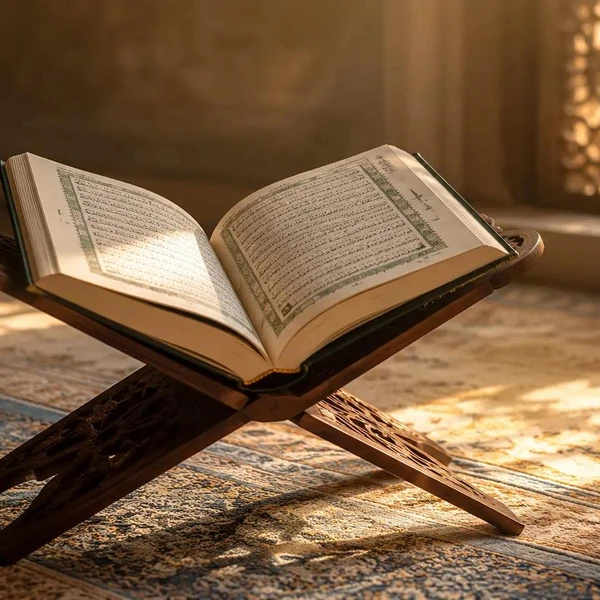
The short answer is 15. That’s the number most printed mushafs mark for Sajdah al-Tilawah, and they sit across 14 surahs because Surah Al-Hajj has two. You’ll sometimes hear 14 instead. That doesn’t mean a different Quran. Scholars counted a couple of the verses differently, and that’s the whole story.
How many Sajdah in Quran are there?
Open most mushafs and you’ll find 15 places marked for Sajdah al-Tilawah. Some of these verses mention prostration, some command it, and some describe people and creation prostrating before Allah.
Here they are in Quran order:
- Surah Al-A’raf 7:206
- Surah Ar-Ra’d 13:15
- Surah An-Nahl 16:50
- Surah Al-Isra 17:109
- Surah Maryam 19:58
- Surah Al-Hajj 22:18
- Surah Al-Hajj 22:77
- Surah Al-Furqan 25:60
- Surah An-Naml 27:26
- Surah As-Sajdah 32:15
- Surah Sad 38:24
- Surah Fussilat 41:38
- Surah An-Najm 53:62
- Surah Al-Inshiqaq 84:21
- Surah Al-‘Alaq 96:19
One caution before we go on. A narration in Sunan Abi Dawud 1401 mentions fifteen prostrations, two of them in Al-Hajj. Al-Albani graded it da’if (weak), so it can’t be your main proof for the number 15.
What is Sajdah al-Tilawah?
This is the prostration of recitation, the sajdah that corresponds to particular ayat in the Quran. When Prophet Muhammad ﷺ recited the Surah in which there was a place of sajdah, he sometimes prostrated, and so did his Companions.
Ibn Umar described it like this: the Prophet ﷺ would recite, reach a Sajdah, and go down, and the people with him went down too. It got so crowded that some of them struggled to find room for their foreheads. That’s in Sahih Muslim 575.
So the practice itself is firmly established, even without the weak report that gives the exact count.
Why 15 Sajdahs but only 14 surahs?
Because Al-Hajj has two. Count surah names and you get 14. Count the marked locations and you get 15.
- 22:18 describes everything in the heavens and on earth prostrating to Allah.
- 22:77 speaks to the believers directly: bow, prostrate, worship your Lord, do good.
Many mushafs mark both. That’s really the only trick to the numbers.
1. Surah Al-A’raf 7:206
The first marked Sajdah comes at the very end of Al-A’raf. The verse says those who are near Allah aren’t too proud to worship Him. They glorify Him and they prostrate.
That theme keeps coming back through the list: humility before Allah. The Sajdah mark is your invitation to stop reading about prostration and actually do it.
If the symbols still feel unfamiliar, a steady reading routine fixes that faster than anything. Students who want more confidence with the mushaf can build it through Iqra’s Quran reading program.
2. Surah Ar-Ra’d 13:15
Here, everyone in the heavens and on earth submits to Allah, willingly or not, and even their shadows prostrate.
That makes Sajdah bigger than one person bowing down. It’s creation submitting to its Creator, and you’re joining in. This is also why recitation prostration can feel so immediate. The verse you just read tells your body what to do next.
3. Surah An-Nahl 16:50
This one has a well-known story attached. In Sahih al-Bukhari 1077, Umar ibn Al-Khattab recited An-Nahl during a Friday sermon. At the Sajdah he came down from the pulpit and prostrated. The next Friday he reached the same verse and didn’t prostrate.
He told the people that whoever prostrated had done well, and whoever didn’t was not sinful. We’ll come back to this when we talk about whether Sajdah al-Tilawah is obligatory.
4. Surah Al-Isra 17:109
People fall on their faces weeping, and their humility grows. The verse ties prostration to what real knowledge of revelation does to a heart.
It’s not an empty movement. The whole thing takes a few seconds, but what’s behind it is much bigger, and understanding the verse is what turns the moment from reacting to a symbol in the margin into actually meaning it.
5. Surah Maryam 19:58
The prophets and righteous servants mentioned here fell down in prostration and tears when the verses of Ar-Rahman were recited to them. No arrogance, no shrugging it off.
It’s a good reminder not to rush through just to hit a page count. Recitation has a physical side and a spiritual side. If you want to slow down and do it properly, structured Tajweed lessons help a lot.
6. Surah Al-Hajj 22:18 (the first of two)
This is the first of Al-Hajj’s two. The verse says everyone in the heavens and on earth prostrates to Allah, and it names the sun, the moon, the stars, the mountains, the trees, the animals, and many people.
Think about that when you go down. You’re joining something the Quran describes as happening across all of creation. It’s also why “14 surahs have Sajdah” doesn’t give you the full count: Al-Hajj adds two.
7. Surah Al-Hajj 22:77 (the second)
Near the end of the surah, believers are told to bow, prostrate, worship their Lord, and do good so they may succeed.
Many mushafs mark this as a second Sajdah, and it’s one of the main reasons people argue about the total. The weak narration in Sunan Abi Dawud 1401 also mentions two in Al-Hajj, but with that grading it can’t settle the question on its own.
8. Surah Al-Furqan 25:60
The verse describes people who are told to prostrate to Ar-Rahman, the Most Merciful, and refuse.
When you recite it, you answer differently. Where they resist, you go down. That’s what makes Sajdah al-Tilawah personal: you’re not just reading about other people’s response to Allah’s words, you’re choosing your own. And it’s why these marks aren’t just printing conventions. They point to a real act of worship.
9. Surah An-Naml 27:26
The Sajdah here comes around verses 25 to 26, where Allah is described as the One worthy of worship, Lord of the Mighty Throne.
Mushaf layouts differ, so the symbol can sit in slightly different spots relative to the verse. Don’t let that worry you. Follow the marking in the reliable mushaf you’re reading, and if you study with a teacher, follow the method they taught you. The aim is to recognize the passage and respond, not to fret over typography.
10. Surah As-Sajdah 32:15
This is the easiest one to remember, because the surah is literally named “The Prostration.”
Verse 32:15 describes true believers as people who fall down in prostration, glorify their Lord, and aren’t arrogant when they’re reminded of His verses. The verse describes it, and you do it.
If you’re memorizing, remembering what the passage says can help you remember where the Sajdah falls. Students in a structured Quran memorization program can mark these places during revision so they don’t slip past unnoticed.
11. Surah Sad 38:24
This one needs a little more explanation. The verse describes Prophet Dawud falling down in prostration and turning back to Allah.
There’s authentic evidence that the Prophet ﷺ prostrated here himself. In Sunan Abi Dawud 1410, graded sahih, he recited Surah Sad from the pulpit, came down at the prostration passage, and prostrated, and the people prostrated with him. The same narration records him explaining that the Sajdah there was connected to a prophet’s repentance, and that he then prostrated along with the people.
This is one of the places where classification gets discussed, which is the next part of the story.
12. Surah Fussilat 41:38
This verse sits inside a warning not to worship created things like the sun and the moon. Worship and prostration belong to the One who created them.
So the theology is plain: the sajdah shows who deserves worship. Even a basic translation changes the experience here. Without it you see a Sajdah sign. With it you see why the verse leads straight into prostration.
13. Surah An-Najm 53:62
The surah ends with a direct command: prostrate to Allah and worship Him.
The evidence for prostrating here is strong. Abdullah ibn Mas’ud reported that the Prophet ﷺ recited An-Najm and prostrated, and the people with him did too (Sahih Muslim 576).
But there’s a second authentic report that complicates things. Zayd ibn Thabit said he recited An-Najm before the Prophet ﷺ and the Prophet did not prostrate (Sahih Muslim 577). Keep both in mind when we get to the ruling.
14. Surah Al-Inshiqaq 84:21
This verse points at people who don’t prostrate when the Quran is recited to them. Read it as a believer and the contrast is hard to miss. The Quran is being recited, prostration is mentioned, and you get to choose submission over refusal.
It’s near the end of the mushaf, so beginners who start with the short surahs hit it early. If you’re memorizing Juz Amma, learn from the start that a Sajdah al-Tilawah sits in this section.
15. Surah Al-‘Alaq 96:19
The last Sajdah in Quran order. The surah closes with the instruction to prostrate and draw near to Allah.
I like how this lands. Al-‘Alaq opens with the command to read and ends with prostration. For anyone learning Quran, that’s a neat reminder that reading and worship aren’t separate things. After 96:19, many mushafs print the Sajdah marker, and that completes the list of fifteen.
Why do some people say there are 14 Sajdahs?
Not because they have a different Quran. The text is the same. The difference is how scholars classify certain locations, mainly the second Sajdah in Al-Hajj and the one in Surah Sad.
There’s authentic evidence the Prophet ﷺ prostrated at Surah Sad (Sunan Abi Dawud 1410, sahih). At the same time, the hadith people usually cite for the exact total of fifteen, Sunan Abi Dawud 1401, is weak.
So the safest wording for a general reader is this: many mushafs mark 15 Sajdah locations, while juristic counting can differ.
Is Sajdah al-Tilawah obligatory?
Scholars differ on this, so it can’t be presented as one settled fiqh answer.
The Umar report is a key piece of evidence. In Sahih al-Bukhari 1077, he prostrated at the An-Nahl verse one Friday, then didn’t the next, and said the one who prostrates does well while the one who doesn’t has no sin. Scholars who don’t consider it obligatory in every circumstance use this report.
The schools of law treat the ruling differently, so if you follow a particular madhhab, take guidance from a qualified teacher or scholar.
Did the Prophet ﷺ perform Sajdah during recitation?
Yes, and the authentic reports are clear.
- Ibn Umar reported that when the Prophet ﷺ recited a surah containing a Sajdah, he prostrated and the people with him did too, sometimes with barely any space (Sahih Muslim 575).
- Sahih Muslim 576 records him prostrating after reciting An-Najm.
- Sunan Abi Dawud 1410, graded sahih, records him prostrating at the passage in Surah Sad.
So Sajdah al-Tilawah isn’t some notation that appeared later in printed Qurans. It goes back to the Prophet’s own practice.
How do you recognize a Sajdah in the mushaf?
Most mushafs use a symbol or a margin mark to tell you that you’ve reached a verse of prostration. The exact look depends on the publisher. You might see:
- the Arabic word سجدة
- a decorative Sajdah symbol
- a mark beside the verse
- a marker in the margin
New students don’t need to memorize all fifteen right away. The symbols get familiar as you read. Still, it helps to know the list, because the marks can look different from one edition to the next.
What do you say during Sajdah al-Tilawah?
One supplication is narrated specifically for this prostration. Aishah reported that when the Messenger of Allah ﷺ prostrated during night recitation, he said words meaning that his face had prostrated to the One who created it and gave it hearing and sight through His power. It’s recorded in Jami’ at-Tirmidhi 3425, and Imam at-Tirmidhi called it hasan sahih.
The transliteration is:
Sajada wajhi lilladhi khalaqahu wa shaqqa sam’ahu wa basarahu bi hawlihi wa quwwatihi.
If you haven’t memorized it yet, don’t panic. Learning the practice correctly comes first.
Is it the same as normal sujud in salah?
The position looks the same, but the reason is different. Sajdah al-Tilawah happens because a verse of prostration was recited or heard. The sujud in each rak’ah of salah is just part of the prayer.
And it’s not Sujud as-Sahw either, which is for forgetfulness or certain mistakes in prayer. A quick way to keep them apart:
- Sujud in salah: the normal prostration in prayer
- Sajdah al-Tilawah: prostration for Quran recitation
- Sujud as-Sahw: prostration for forgetfulness in prayer
What if you’re only listening?
The Companions sometimes prostrated with the Prophet ﷺ when he recited a Sajdah verse. Sahih Muslim 575 mentions it, with those around him prostrating too.
What about someone listening to a recording, deliberately listening to a live recitation, or overhearing a verse by accident? Those cases involve fiqh details, and scholars treat them differently. A short article shouldn’t flatten them into one rule. If you’re unsure about your own situation, ask a trusted scholar who knows the madhhab you follow.
Do you have to prostrate every time you read the verse?
The Sunnah shows that Sajdah was performed at these verses. It also shows times when a verse was recited without prostrating.
Zayd ibn Thabit recited An-Najm before the Prophet ﷺ and didn’t prostrate (Sahih Muslim 577). Umar prostrated one Friday and deliberately didn’t the next (Sahih al-Bukhari 1077).
That’s why you can’t claim every scholar treats it as obligatory every single time.
An easy way to remember the 15 locations
You don’t need the whole list memorized before you start reading. Just keep the sequence in your head:
Al-A’raf → Ar-Ra’d → An-Nahl → Al-Isra → Maryam → Al-Hajj twice → Al-Furqan → An-Naml → As-Sajdah → Sad → Fussilat → An-Najm → Al-Inshiqaq → Al-‘Alaq
The one thing to hold onto is Al-Hajj. Remember it has two, and the 15-across-14 puzzle sorts itself out. Regular reading will do the rest.
Frequently asked questions
How many Sajdah in Quran are commonly marked?
Fifteen Sajdah al-Tilawah locations in many mushafs, across 14 surahs.
Why do some people say there are only 14?
Scholars classify certain locations differently. It’s about fiqh and counting, not the text of the Quran.
Which surah has two Sajdahs?
Al-Hajj, at 22:18 and 22:77.
What’s the first Sajdah in Quran order?
Surah Al-A’raf, verse 206.
What’s the last?
Surah Al-‘Alaq, verse 19.
Is there a Sajdah in Surah As-Sajdah?
Yes, at 32:15.
Is Surah An-Najm a Sajdah surah?
Yes. The Sajdah is at the end, 53:62, and Sahih Muslim 576 records the Prophet ﷺ prostrating when he recited it.
Is Sajdah al-Tilawah mandatory?
Scholars differ. Sahih al-Bukhari 1077 records Umar saying there’s no sin on the one who doesn’t prostrate.
Did the Prophet Muhammad ﷺ perform Sajdah al-Tilawah?
Yes. Sahih Muslim 575 and 576 both describe it.
Is the hadith saying there are exactly 15 Sajdahs authentic?
The narration in Sunan Abi Dawud 1401 mentions fifteen, but Al-Albani graded it da’if, so it shouldn’t be the only proof for the exact total.
Conclusion
So how many Sajdah in Quran? The number you’ll meet in most printed mushafs is 15 locations across 14 surahs, with Al-Hajj holding two.
Seeing 14 somewhere shouldn’t throw you. Scholars classified a few of these passages differently, and the narration that states fifteen outright is weak. What’s firmly established is the practice itself: the Prophet ﷺ prostrated when he recited the Quran, and his Companions prostrated with him.
For a reader, the simplest path is to learn the Sajdah symbols in a reliable mushaf, know what they mean, and take the detailed rulings to a trusted teacher.